Evolution of acute renal failure in critical hemodialysis patients
Keywords:
RENAL INSUFFICIENCY; INTENSIVE CARE UNITS; HEMODIALYSIS UNITS; HOSPITAL; KIDNEY DISEASES; PATIENTS.Abstract
Introduction: acute renal failure is a clinical syndrome, secondary to multiple etiologies; it is characterized by the abrupt deterioration of renal function, potentially reversible with high morbidity and mortality in Intensive Care Units. To examine the behavior of this condition will allow the development of protocols of the early intervention, to avoid the fatal outcomes or the admission to the chronic hemodialysis program.
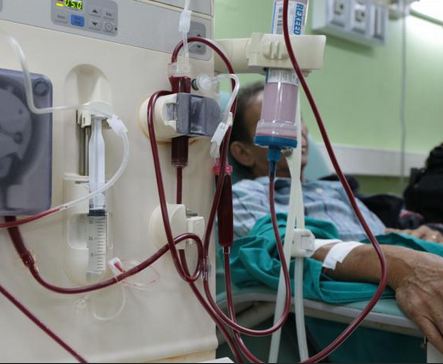
Objective: to determine the clinical and epidemiological behavior of acute renal failure in critically-ill hemodialysis patients.
Methods: a descriptive, retrospective study was conducted in the Intensive Care Unit at Abel SantamaríaCuadrado General Teaching Hospital in Pinar del Rio, from August 2016 to July 2017. The target group included 486 patients suffering from acute renal failure and the sample comprised 97 patients who underwent hemodialysis in the period studied.
Results: male sex prevailed (61.86 %) and ages over 61 years (21.63 %). Sepsis was the most frequent cause of acute renal failure (46.39 %) and the pre-renal one according to its pathophysiologicalorigin (88.58%), with predominance of non-oligouric (54.59 %). Out of the patients with a diagnosis of pre-renal acute renal failure, 38.11 % required between 8 and 14 hemodialysis procedures, and the majority of the renal patients needed 21 or more sessions. More than the half of patients died (56.70 %), of them 16.48 % were between 61 and 70 years old, 16.50 % required iterated hemodialysis.
Conclusions: pre-renal and renal failure with hemodialysis requirement and evolution to death.was the behavior of acute renal failure in the patients studied.
Downloads
References
11. Vazquez JG, Solis Castillo LA. Frecuencia y Evolucion clínica de la insuficiencia renal aguda en pacientes obstétricas tratadas en UCI del hospital de alta especialidad en cuidad de Mexico. Medicina Intensiva. [Internet] Mayo 2017 [Citado 2018/10/20]; 41(4): [aprox. 63p.]. Disponible en: http://www.medintensiva.org/es-frecuencia-evolucion-clinica-insuficiencia-renal-articulo-S0210569116300341
2. Hasshemian SM, Jamaati H, Farzanegan Bidgoli B, Farrokhi FR, Malekmohammad M, Roozdar S, et al. Outcome of kidney injury in critical care unit base don AKI Network. Tanaffos. [Internet] 2016 [Citado 2018/10/20]; 15(2): [aprox. 6p.]. Disponible en: https://www.ncbi.nlm.nih.gov/pubmed/27904540
3. SELLER-PÉREZ G, MÁS-FONT S, PÉREZ-CALVO C, VILLA-DÍAZ P, CELAYA-LÓPEZ M, HERRERA-GUTIÉRREZ ME. Lesion renal aguda: Nefropatia en la unidad de cuidados intensivos. Medicina intensiva. [Internet] 2016 [Citado 2018/10/20]; 40 (6): [aprox. 8p.]. Disponible en: https://www.sciencedirect.com/science/article/abs/pii/S0210569116300948?via%3Dihub
4. Rivas Sierra R. Fracaso Renal Agudo. En: Alfonzo Guerra J. Nefrología. La Habana, Cuba: Editorial Cciencias Médicas; 2016. p. 40.
5. Peres LA, Wandeur V, Matsuo T. Predictors of AKI and mortality in an Intensive Care Unit. J Bras Nefrol. [Internet] 2015 [Citado 2018/10/20]; 37(1): [aprox. 8p.]. Disponible en: https://www.ncbi.nlm.nih.gov/pubmed/25923749
6. Lin J-Q, Cai GY, Liang S, Wang WL, Wang SY, Zhu FL, et al. Characteristics of and risk factors for study death in elderly patient with acute kidny injury: multicentre retrospective study in China. Postgrad Med J. [Internet] 2018 [Citado 2018/10/20]; 94(1111): [aprox. 5p.]. Disponible en: https://www.ncbi.nlm.nih.gov/pubmed/29514995
7. Bagshaw SM, Darman M, Osterman M. Tecnicas de reemplazo renal en la Insuficiencia renal Aguda del paciente critico; novedades e incertidumbres. Inttensive Care Med [Internet] 2017 [Citado 2018/10/20]; 43: [aprox. 13p.]. Disponible en: https://anestesiar.org/2017/tecnica-reemplazo-renal-la-insuficiencia-renal-aguda-del-paciente-critico-novedades-e-incertidumbres/
8. Rodriguez Garcia E, Pascual Santos J. Cuando iniciar diálisis en la Insuficiencia renal aguda en pacientes críticos. Revista nefrología. [Internet] 2017 [Citado 2018/10/20]; 37(6): [aprox. 7p.]. Disponible en: http://www.revistanefrologia.com/es-cuando-iniciar-dialisis-insuficiencia-renal-aguda-pacientes-criticos-articulo-S0211699517300103
9. G Salinas. Estudio multicéntrico de mortalidad en pacientes sépticos con lesión renal aguda hospitalizados en los servicios de terapia intensiva, sometidos a hemodiálisis intermitente de baja intensidad en comparación con los pacientes sometidos a hemodiafiltración on line, en el periodo noviembre 2013 a abril de 2015. [Tesis]. Quito; 2016. Disponible en: http://repositorio.puce.edu.ec/handle/22000/10476
10. Monier Badia AM, Mena Miranda VR. Caracterizacion del daño renal agudo en pacientes con sepsis. Rev Cubana Med Intensiva y emergencia. [Internet] 2018 [citado 2018/10/20]; 17(1): [aprox. 11p.]. Disponible en: http://www.revmie.sld.cu/index.php/mie/article/view/265
11. Rodriguez Mendez A, Mesa NR, Pupo Rojas CG. Fracaso renal agudo en el paciente grave. RevCubanaMed Intensiva y Emergencia. [Internet] 2017 [citado 2018/10/20]; 16(3): [aprox. 9p.]. Disponible en: http://www.revmie.sld.cu/index.php/mie/article/view/22-31/html_111
12. Lococo B, Fazzini B. Insuficiencia renal aguda y sepsis. Revista nefrología argentina. [Internet] 2018 [citado 2018/10/20]; 16(1): [aprox. 20p.]. Disponible en:www.nefrologiaargentina.org.ar/numeros/2018/volumen16.../Articulo_01_marzo.pdf
13. Salgado G, Landra M. Insuficiencia renal aguda según RIFLE y AKIN: estudio multicentrico. Medicina Intensiva. [Internet] 2014 [citado 2018/10/20]; 38(5): [aprox. 6p.]. Disponible en: https://www.sciencedirect.com/science/article/abs/pii/S0210569113001083
14. Mah DY , Cheang WS. 135 Review of acute kidney injury requiring dialysis. Cases severes of four district hospital in Johor Malaysie. Kidney International Reports. [Internet] 2017 [citado 2018/10/20]; 2: [aprox. 41p.]. Disponible en: https://www.kireports.org/article/S2468-0249(17)30235-8/pdf
Published
How to Cite
Issue
Section
License
Authors who have publications with this journal agree to the following terms: Authors will retain their copyrights and grant the journal the right of first publication of their work, which will be publication of their work, which will be simultaneously subject to the Creative Commons Attribution License (CC-BY-NC 4.0) that allows third parties to share the work as long as its author and first publication in this journal are indicated.
Authors may adopt other non-exclusive license agreements for distribution of the published version of the work (e.g.: deposit it in an institutional telematic archive or publish it in a volume). Likewise, and according to the recommendations of the Medical Sciences Editorial (ECIMED), authors must declare in each article their contribution according to the CRediT taxonomy (contributor roles). This taxonomy includes 14 roles, which can be used to represent the tasks typically performed by contributors in scientific academic production. It should be consulted in monograph) whenever initial publication in this journal is indicated. Authors are allowed and encouraged to disseminate their work through the Internet (e.g., in institutional telematic archives or on their web page) before and during the submission process, which may produce interesting exchanges and increase citations of the published work. (See The effect of open access). https://casrai.org/credit/